
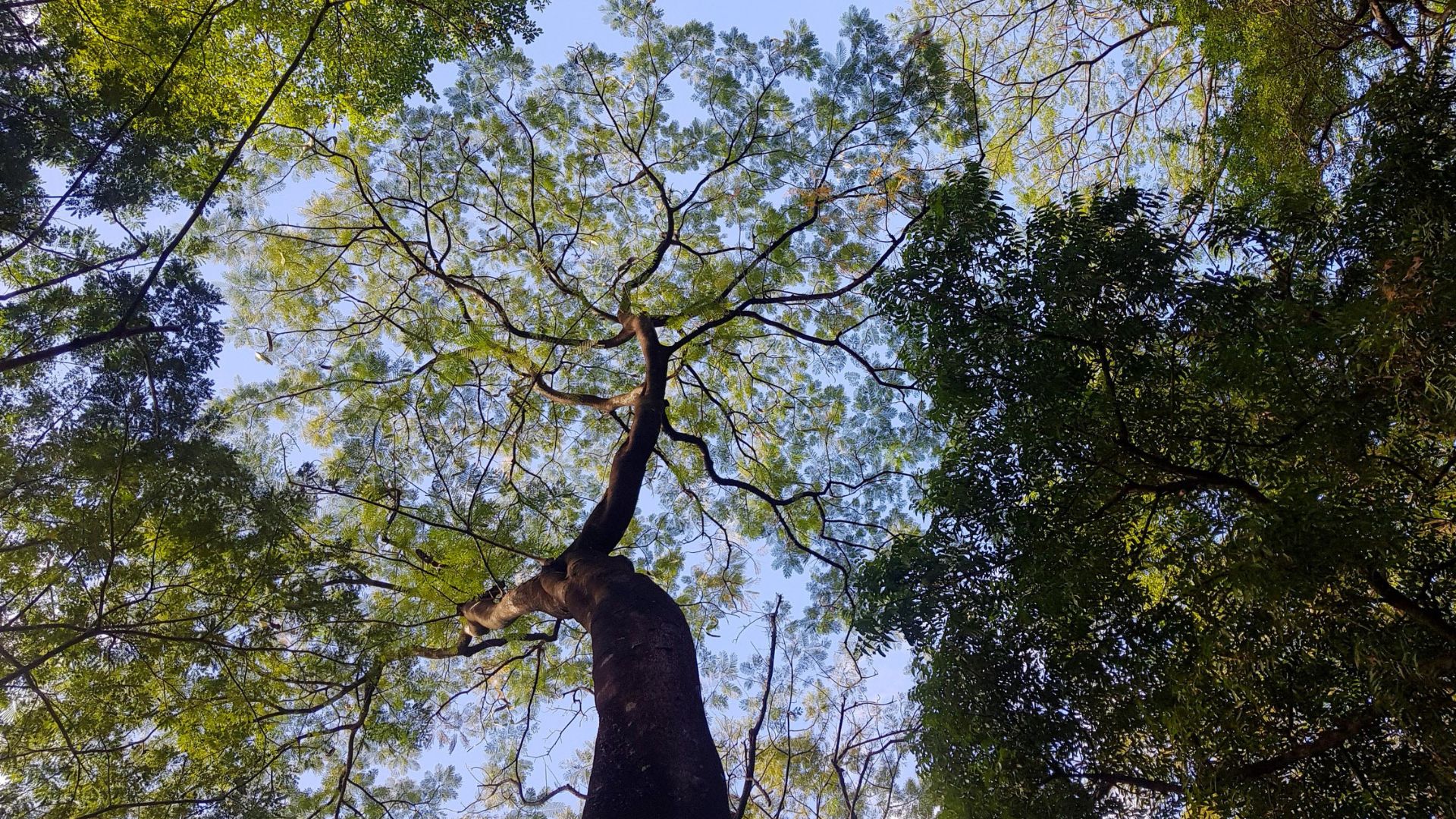






Ask your parents what their home cities looked like when they were young. They’ll probably recall talahib fields, tree-lined streets, cooler temperatures and roads that don’t take longer than a Manila to Hongkong flight to traverse (I’m looking at you, EDSA).
With nearly 15 million residents, Metro Manila has grown into one of the most densely populated cities on Earth – and megacities like Cebu and Davao are catching up fast. According to the United Nations, 55% of all people now live in cities – a ratio that might jump to 70% beyond 2050. These concrete jungles pose unique social and environmental challenges. Cities offer jobs – but they’re often hot, noisy, polluted, congested, flood-prone and stressful living spaces. To illustrate this, parts of the city of Metro Manila – particularly Quezon City – were submerged in floods last weekend.


“The country’s Urban Biodiversity Program aims to simultaneously conserve biodiversity, increase climate resilience and enhance the quality of life in our cities,” says Mariglo Laririt, BMB Assistant Director. “For truly livable cities, we must nurture a sustainable environment, but sustainability gaps continue to widen with overpopulation and a lack of access to green spaces, worsened by pollution, climate change and biodiversity loss.”

To help mainstream the creation and maintenance of green spaces in Philippine cities, over 70 members of the Department of Environment and Natural Resources (DENR), Department of the Interior and Local Government (DILG), United Nations Development Programme (UNDP), Biodiversity Finance Initiative (UNDP-BIOFIN) and various local governments attended a training workshop at the Swiss-Belhotel Blulane in Manila from 26 to 28 August 2025.
“Green spaces include public parks, vegetated sidewalks, native tree arboretums, community-run gardens, rivers and other wetland parks, plus other areas where local biodiversity can thrive. These spaces provide people and nature with a host of benefits, including clean air and improved flood control,” explains Joy Navarro, head of the DENR’s Caves, Wetlands and Other Ecosystems Division (CAWED) of the Biodiversity Management Bureau (BMB). “Continuous urban development may seem lucrative, but green spaces can solve many of the growing problems faced by the world’s cities.”
The World Health Organization (WHO) recommends at least nine square meters of ‘green space’ per person – but in megacities like Metro Manila, less than five square meters per person is available.
Green Spaces and Urban Ecosystem Services
Cities without parks and green spaces face various ecological challenges. Barren, concrete cityscapes absorb and retain heat in what’s known as the Urban Island Heat Effect. To beat the heat, people rely on household air-conditioners or escape to shopping malls, all of which blow hot exhaust back out to open areas. This creates a negative feedback loop, making cities even hotter.
Trees have proven to be effective flood-control measures, especially in cities near rivers and other waterways.
Endless streams of gasoline or diesel-powered vehicles generate air, noise and light pollution to spur various health problems, ranging from asthma to lung cancer. In terms of wildlife, most cities host only the most adaptable species of plants and animals, including invasive maya birds, pigeons and cockroaches. Green parks mitigate pollution and provide habitats for a plethora of flora and fauna.


“Instead of constantly relying on technology, let’s use Nature-based Solutions (NBS) to solve urban ecological challenges,” says Anabelle Plantilla, national project manager for UNDP-BIOFIN Philippines. “Imagine for instance if the Pasig River has thriving green parks lining both its banks. Native trees are effective flood control measures that provide shade, habitats and surplus food in the form of fruits. A green buffer zone between rivers and households minimizes riverine waste, protecting water quality and biodiversity. Parks are also wonderful places for friends and family to exercise and socialize. The social, environmental and economic benefits of green spaces make them great investments for the wellbeing of city dwellers.”
Green spaces not just beautify drab environments – they absorb vehicle emissions and provide habitats for birds and insects. Studies have also confirmed that green spaces are good for mental health – reducing the depression, anxiety and other psychiatric problems faced by more and more people yearly.
“These green oases promote social interaction, historical and cultural appreciation, recreation and tourism, while enhancing the property value of urban areas,” adds Argean Guiaya, a licensed Environmental Planner and a Supervising Ecosystems Management Specialist for DENR-BMB. “City-planners will also realize how they simultaneously address numerous Sustainable Development Goals (SDGs) – ranging from climate action (SDG 13) to sustainable cities (SDG 11).”
The three-day workshop outlined plans to include green spaces in the development and budgetary plans of highly urbanized Philippine cities, a requirement to secure the Seal of Good Local Governance (SGLG) – a yearly award given by the DILG to LGUs that meet performance standards in 10 aspects of governance, from financial sustainability to environmental management. Cities that qualify for the SGLG can receive several million Pesos in cash to implement innovative projects.
“A crucial first step is to know where each Pinoy city stands in terms of urban biodiversity. We’re developing a City Biodiversity Index (CBI) for planners to gauge their remaining green spaces and map out possible areas where they can build new ones,” says Kelvin Balaquit, DENR-BMB Ecosystems Management Specialist. The CBI provides a dashboard to track, justify and improve investments in green spaces and other forms of sustainable infrastructure.
Local government laws currently require cities to have at least one green park, but lawmakers are pushing for stronger measures to integrate green spaces into development plans by establishing new public parks, adopting green building codes, establishing nurseries for native plants and trees, plus social mobilization, communications and capacity-enhancement for city planners and managers – particularly in terms of fundraising and bridging financial gaps that bar effective implementation.
“More than generating numbers, this new CBI system pushes us to take responsibility, find new solutions and stay committed to our vision of greening up our home cities,” shares Sarah Labasatilla-Bonzon, planning officer from the city of Manila. “In Manila, where every bit of green space counts, the CBI helps ensure our environment is prioritized, monitored and included in city plans.”
In cityscapes dominated by towering skyscrapers such as Makati, the CBI is being hailed as a much-needed tool. “We learned a lot from the workshop and want to concentrate on food security via urban agriculture and community science to engage Makati residents to engage in biodiversity conservation and strengthen their love for nature,” adds Arnie Alonzaga from the Makati City local government.
The workshop smoothly complements the Philippine Biodiversity Strategy and Action Plan (PBSAP) and Philippine Development Plan (PDP), particularly its goal of creating livable, sustainable and climate-resilient communities. The PBSAP targets a 5% increase in green space for the country’s largest cities by 2028 while helping mainstream biodiversity-related initiatives into government programmes, budgets and investments.
“We often think of conservation as something that happens in forests and mountains, but our cities are also frontlines. Urban green spaces are no longer a luxury,” concludes Henry Pacis, DENR-NCR’s Assistant Regional Director for Technical Services. “They’re absolutely necessary for the health of Filipinos.”
Through the integration of new green spaces, Philippine cities will hopefully be greener, safer and more livable places in the coming years.